

How to Compel People to Listen to Your Sermon.- Part 1
In a TikTok world, you can’t afford to ignore your sermon’s introduction.
A sermon covers some of the most important information anyone will ever hear. Failing to grab people’s attention interestingly or entertainingly, just might be one of the worst sins a preacher can commit. So, read on to find out how to introduce your sermon without destroying your message, especially with today’s short attention spans.
A good introduction to a sermon does several things. Let’s look at them in order.
Grabbing attention with a video like this created using Gemini AI can help.
Grab Attention so People Will Want to Listen
You have less than a minute to grab someone’s attention. We used to say it took 90 seconds, but that’s down to about 30-40 seconds according to the American Psychiatric Association. I don’t often cite the APA, since they’re not a Christian organization. But I think it’s safe to admit this study might actually prove true in light of things like social media. People swipe past videos so quickly that the first ten to fifteen seconds can do a lot to grab attention.
The following video offers 5 techniques for introducing an idea or speech. The creator, Philipp Humm is a talented influencer, but I have no idea about his spiritual state. He does a great job of explaining and illustrating these effective introduction strategies.
Let’s take a closer look at these 5 strategies for grabbing your audience’s attention in the first minutes of your sermon. We’ll apply them specifically to preaching something Humm doesn’t do in his video
Surprising Statement
“The shortest distance between two points is a jagged line.” I once heard a preacher offer that as a great opening statement in a sermon about the direction of God in a person’s life based on the story of the Exodus of Israel and failing to enter the Promised Land. I heard this in my Doctor of Ministry seminar back in 2000 at Gordon-Conwell. It still sticks with me today. The statement means that sometimes we have to take some turns to get where we’re going to learn how to obey God.
That’s a surprising statement. It makes the audience think and then drives people to listen so they can figure out what the speaker means.
Come up with good statements like this by taking your sermon’s Big Idea and brainstorming ways to state that in a surprising statement.
I recently preached on John 11, the story of Jesus raising Lazarus. The story presents the Big Idea as follows:
When We Submit to God’s Plan We’ll See Glod’s Glory.
The story shows that Lazarus was sick and Jesus intentionally delayed returning to his home in Bethany so that he would die and Jesus could prove his power, glory, and Messianic position.
I wish I had introduced that sermon like this.
Sometimes you gotta let a guy to to show how great you are.
Instead, I started talking about trophies and showed the congregation a cheap one I bought from Amazon. I gave it to my thirteen-year-old and told him to make it look ugly. This illustrates that we are God’s trophies, which He earns through His grace and glory. However, He gives them to us, even though we don’t deserve them, just like a ten-year-old Little League player receives a participation trophy even though his team never won a game and he never got a hit all season.
To stay with the Surprising Statement Strategy, I could have started with the statement…
The best trophies are dirty, scratched up, and ugly. Just like the people who receive them!
Show of Hands

How would you introduce a sermon on the struggles of praying when we’re unable to coherently voice our distraught feelings based on Romans 8:26, which says…
Likewise the Spirit also helps in our weaknesses. For we do not know what we should pray for as we ought, but the Spirit Himself makes intercession for us with groanings which cannot be uttered.
A show of hands approach might work. Ask your listeners, “Raise your hand if you’ve ever been so upset, you couldn’t come up with a coherent prayer. You couldn’t bring yourself to even talk to God because you were so upset, you didn’t know what to say.”
This makes them think about what to share. It also includes the first idea — a Surprising Statement. We’re not supposed to struggle with how to pray, but we do. Romans 8:36 not only acknowledges it, but encourages us when we feel that way.
As Philip Humm said in his video above, we should then acknowledge the responses. If people raise their hands, then say something like, “So, I’m not the only one.”
In my sermon on Romans 8:26, I then shared a time I felt that way. My son Daniel had a collapsed lung and needed emergency surgery. As my wife and I sat in the waiting room, we were not sure if he would survive the surgery. I struggled to come up with a prayer. That verse came to mind, and the Holy Spirit comforted me and helped me know He was praying on my behalf.
Take your time and acknowledge the responses. This will help you transition to the next part of your introduction.
Imaginary Scene
Put yourself in this situation. Your daughter comes to you and confesses that she and her boyfriend became sexually active a few months ago. Now she’s late on her period. As you sit across from her on your couch, you see her squirm in the chair, worried about how you will react. It is a moment like this where you really learn whether you’re pro-life or not.
This imaginary scene introduces a message on the sanctity of human life Sunday better than announcing, “Today is sanctitiy of human life Sunday.”
As Humm suggests, make sure you use concrete, detailed language. Include the location of the conversation and where you’re seated. What time of day is it, and what sounds do you hear? Too much detail will get overwhelming.
Tell a Story
The imaginary scene is a form of the story strategy. However, the imaginary scene is fictional most of the time. The story might not ask them to imagine putting themselves in the scenario. It also could include a true story of your owsn experience or someone else’s experience.
Be detailed like we did with the imaginary scene. But don’t lie. Create the scene, but only if it’s accurate in a true story.
Craft the story so that the last line naturally moves on to the next part of the introduction, which will expose the reason for the sermon. More on that in part two of this article.
Complete Silence
We include this one because it’s in the video above. However, I don’t like this strategy. It’s the most annoying one, so use it carefully.
Comment below if you can think of a good use of this strategy. I suppose it might be useful if, just before the sermon, there was a lot of commotion in the sermon. As a guest speaker, you might need to introduce yourself and say a word before the sermon. A period of silence after your introduction might help differentiate between your introduction of yourself and the introduction of the message.
I sometimes use silence when I pray publicly. I pause for a moment. Take a deep breath, and then begin the praise portion of my prayer.
Key Elements in Grabbing Attention
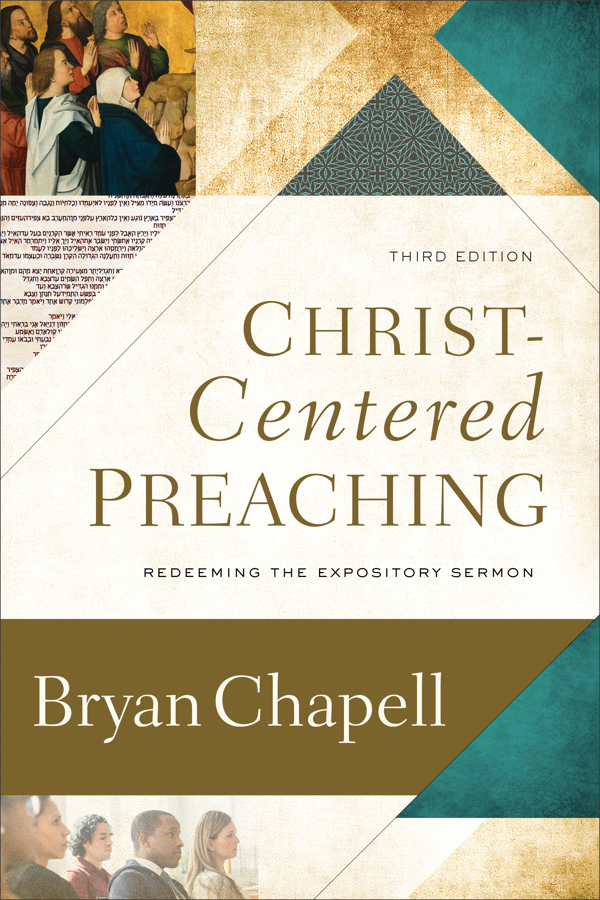
Click the cover to buy the book using my partner link with Logos.
Bryan Chappell in Christ Centered Expository Preaching lists 6 elements useful in good attention-grabbing introductions.
Involve their imaginations.
Involve their sense of wonder.
Involve their appreciation of the past.
Involve their fear of the future.
Involve their outrage.
Involve their compassion.
If you want to benefit from Chappell’s book, take a look at the 3rd Edition of Christ Centered Expository Preaching or the 3-course Mobile Ed bundle.
Each of the above tools works a lot like the previous 5 strategies explained above. You won’t use each of Chappel’s six tools.
Pictures Paint a Lot of Words
A picture can also introduce a sermon. We might display something shocking, funny, or thought-provoking. If you can’t display pictures, consider using a houndout. I recently created a handout for a message on Romans 8:26.

The notebook paper with tears illustrates the idea of the verse. I then shared a story about struggling to pray when my son faced a potentially life-ending collapsed lung.
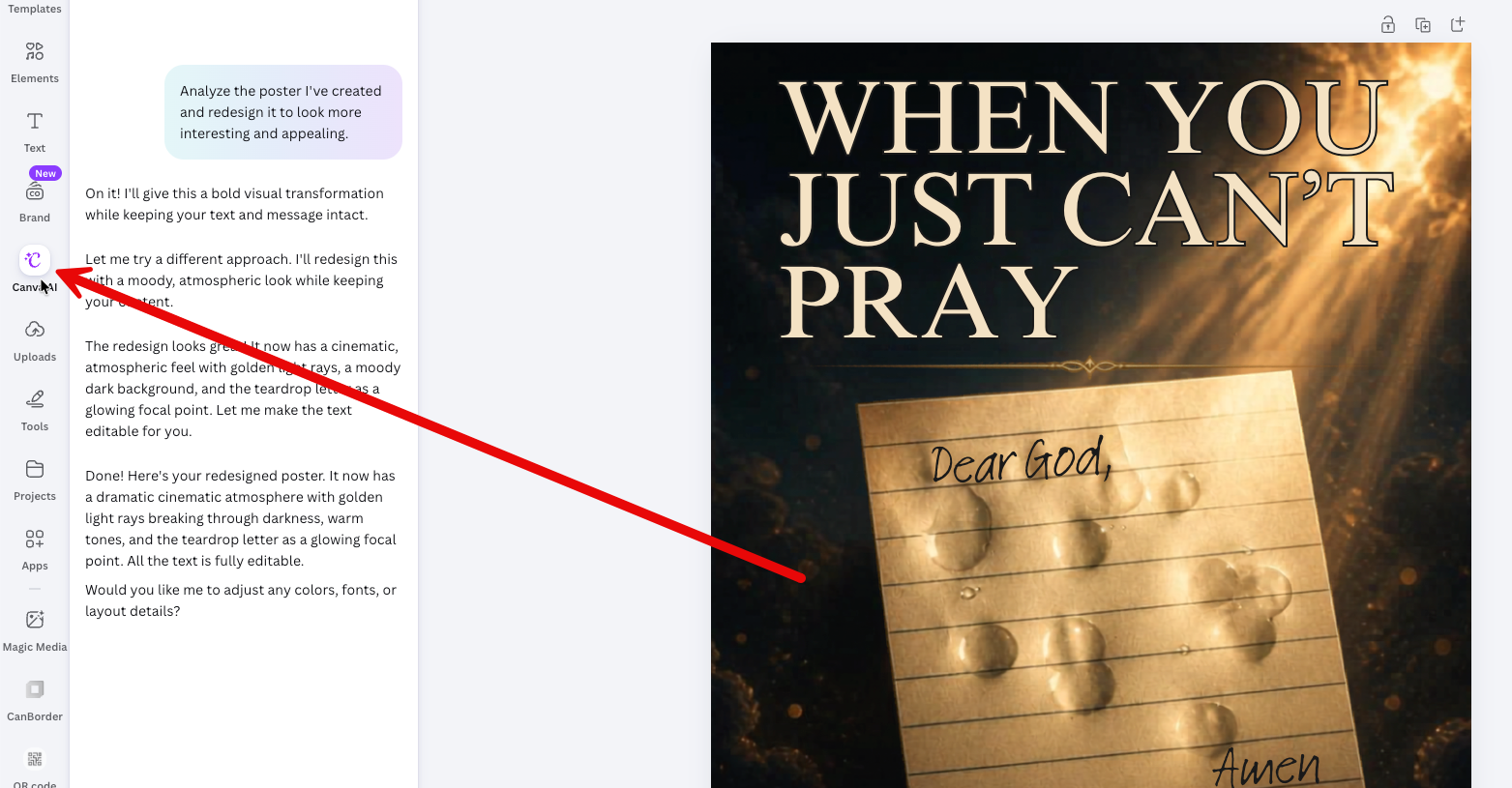
Find the Canva AI tool on the left side toolbar in Canva. Describe what you want and Canva does a great job of producing impressive results.
I used Canva to create a simple design and then asked Canva’s AI tool to make it look more appealing. Find it on the toolbar on the left. I create a generic-looking toolbar with the black and white image of the lined paper. I put the words at the top and the verse at the bottom. It had a white background. I asked Canva AI to “Analyze the poster I've created and redesign it to look more interesting and appealing.” It produced the nice poster, which I handed out and referred to in the introduction to my sermon.
Using Logos to Find Attention-Grabbing Content
I use Logos Bible Software, which you can get for free for 60 days. If you don’t use that link, you’ll only get a 30-day trial.
Logos includes a few tools that will help you create exciting, attention-grabbing elements to use in your sermon introduction.
Search for images using the Factbook, Guides, Media, or Atlas.
Find stories or quotes using one of the Guides.
Use the Study Assistant to find content based on topic or passage.
All links to Logos Bible Software site are partner links and I get a small portion of the sale price.