

6 Fun Cameras to Take Your Church Media Up a Notch
These 6 fun cameras will take your church media to the next level. Check out the cameras and have fun shooting creative images.
I love cameras, which help me promote my church and communicate with people. Most church media people or pastors take photos and videos with a phone like the new Apple iPhone 14 or the new Samsung Z Fold 4. Others have a DSLR or a mirrorless camera. Many people use a point-and-shoot they bought for $100-$200. But you can create more creative and fun images with these 6 fun cameras that can take your church media up a notch.
6 Fun Cameras and Their Uses in Church Media
What can you do with these cameras?
- Create social media posts that grab attention for your Facebook, Instagram, Twitter, TikTok or more.
- Add fun images of your church activities to the above sites or post them to your own website to drive people there more regularly.
- Share what groups and ministries in your church do to serve others and fellowship together, like Youth outings, Senior adult events, special programs by the children, or others.
- Create art for your church building walls.
- Add attractive images to your worship presentations for backgrounds, lyrics, Bible verses, announcements, or attention-grabbing loops before and after services.
- Illustrate ideas in your worship service, especially the sermon.
- Don't forget videos, like welcome videos or announcements.
However you use your camera, consider moving beyond the smartphone to something that makes more creative images.
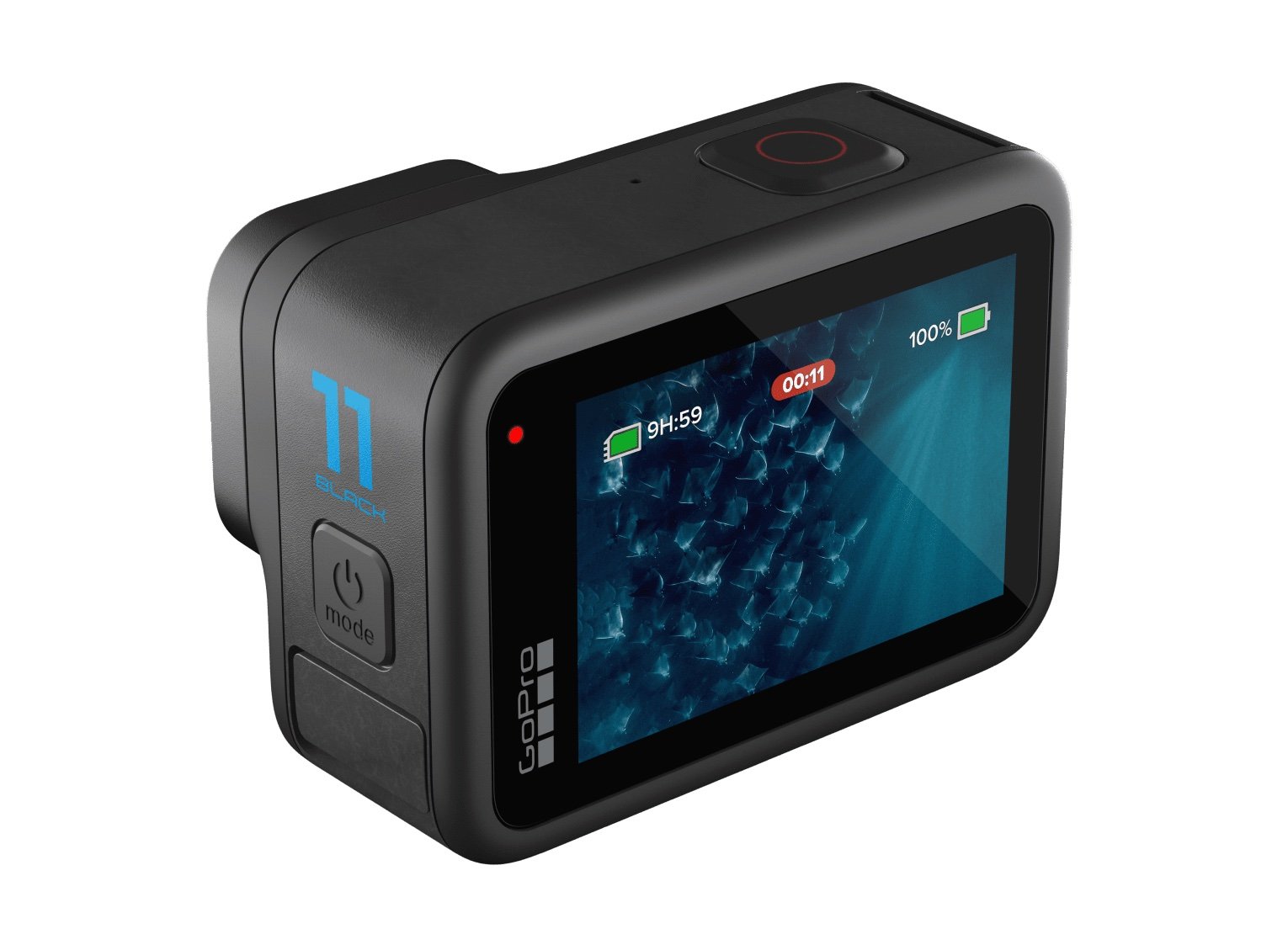
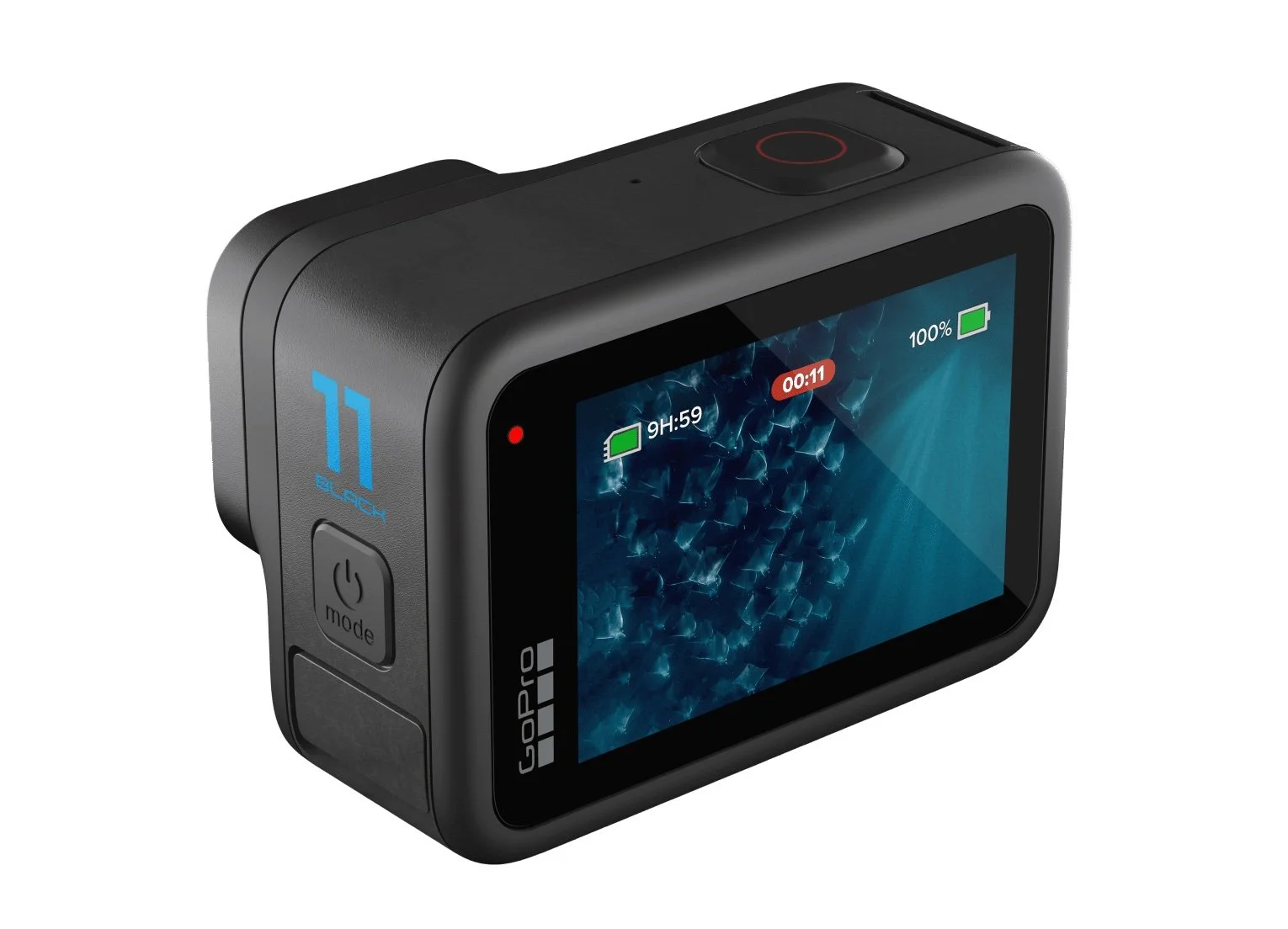
GoPro Hero 11 or Earlier

The GoPro created the "action camera" or at least popularized it. Most people think of them as tools for extreme sports. You can use it for that. If your youth or young adults go skiing, bring a GoPro to take some fantastic shots to show off the following week at church. You can also put them on the youth page of your website or social media. Save the shots or videos to promote the trip next year.

GoPro just released the GoPro Hero 11, and I upgraded my Hero 10. I probably shouldn't have, but I love having the latest and greatest. It costs $349.99 with a one-year subscription to their cloud backup service. If you buy from other stores, it will cost $100 more. The best deal costs $50 more with 2 extra batteries, a charger that charges up 3 batteries, a nice selfie stick that floats in water, plus a 32GB micro-SD card.
You absolutely should get one accessory for your GoPro. It's the GoPro Volta, a battery and tripod in one. It costs $129.99. Put the GoPro on the tripod and then plug in the cable to extend your GoPro battery. GoPros are notorious for short battery life, so an external battery like this will help.

DJI Osmo Action 3
I love DJI cameras. The DJI Osmo Action 3 is the competitor to the GoPro above. I post it here because it doesn't cost as much and has a few cool features you don't get on the GoPro. First, the price makes it worth a look. For the same price as a GoPro Hero 11, you'll get the DJI Osmo Action 3 plus some great accessories, like a magnetic connector that you can then snap to an excellent mount for your helmet, to a mount for your car, on a selfie stick, and more. It starts at $329, but the great combo packages run up to $439.


I did a nice slow-motion video of the leaves falling from a treat in my front yard. You could create a looping background out of a video like this for lyrics, or other fall uses in worship. It could also illustrate a sermon idea like a dying spirit that looks healthy but eventually becomes cold and worthless in the kingdom due to no connection with the tree, which is the church.
Which camera would I buy? I'd probably go with the GoPro Hero 11. The Osmo Action 3 produces slightly soft video; some even say their camera shoots blurry videos. Mine is not as bad, but it's not as sharp as I'd like.
Drone Cameras Like the DJI Mini 3 Pro

Did I say I love DJI? The DJI Mini 3 Pro drone can help you get some fantastic shots of your church property, activities, or general scenery. Use the images or video as slide backgrounds or foreground images to illustrate ideas. I shot the above photo using the bracketing feature on the Mini 3 Pro. It takes 3 or 5 images that are exposed differently so that they are...
- 2 stops darker
- 1 stop darker
- the main exposure
- 1 stop brighter
- 2 stops brighter
If you chose 3 images, you get the primary exposure plus one brighter and one darker.


I took the five shots and put them in a program called Luminar Neo which automatically combines them so that areas where you might see no detail because it's too bright or too dark, now shows plenty of detail. Tweak the photo to get better overall exposure, detail, and color. Then export it and add the words in a program like Photoshop, Affinity Photo, or Canva.

You can do a lot with a drone. Take photos of activities from above. Don't forget you can use it for close-up shots too. It makes an excellent tripod for large groups.
I recommend the DJI Mini 3 Pro because it's a fantastic starter drone. It's small, which makes it easy to take with you. It also weighs less than 250 grams, which makes it easier to use because larger drones come with additional FAA regulations.
DJI Osmo Pocket 2
Another DJI camera? Yes, because they are crushing it with creativity. The DJI Osmo Pocket 2 is a tiny gimbal camera that fits in your pocket and stays with you all the time. You can also mount it on a tripod or use other cool connections, but it shines as a handheld camera.
I had the first version, and it was pretty good. The 2 improves image quality and stability for $349. You can get it in white or black. There's a bundle with some great accessories for $499.
The video and images look good. For such a small camera, you'll get great quality.
Having the camera with you always means you don't have to worry about carrying around a big camera, and you'll get more stable shots than most phones.
You can connect it to your phone, giving you a larger image of what the camera's shooting. Or you can use it standalone, which is how I used the previous version most of the time.
Insta360 Go 2
The Insta360 Go 2 gives users a unique way of shooting 1st-person photos and videos by placing the camera on their chest, a hat, or on their head. You can put it in other places depending on your creativity.
The camera comes with some excellent stabilization, so it looks stable while you're running or walking around as you wear the camera. The case charges the camera and holds it to give you an instant tripod. It's so tiny, and you can carry it everywhere.


You'll get some decent-quality images that you can frame using the app on your phone. Also, the images look pretty good.
The camera costs $300 for a 32GB model, but I'd get the 64GB version at $329.
Insta360 One RS 1-Inch Edition or Insta360 X3
360-degree cameras shoot two photos or videos with two lenses on opposite sides of the camera. The software in the camera stitches the two images together to create a 360-degree photo or video.

I love 360-degree tiny planet photos. They're fun and show the scene in a unique way that you can't get with a traditional or phone camera. These images get attention on social media.
The two cameras I recommend come from the same company. Inste360 makes both of these cameras and the Go 2 mentioned above. They started making consumer-grade 360-degree cameras a decade ago. They weren't great, but today the Insta360 One RS 1-inch Edition shoots professional-quality images. You can do the fun photos above or shoot videos of events.
Our church held its Trunk-or-Treat event on Halloween night to give families an alternative to worldly events. There were people everywhere. Shooting with a traditional camera means you might miss what's behind you or beside you. With a 360-degree camera, you can shoot it all at once time and then choose later what to focus on by editing in the app on a phone or tablet or on a piece of software on your computer. The video above was shot using the Insta360 One RS 1-inch Edition.
What's the difference between the Insta360 One X3 and the Insta360 One RS 1-inch Edition? The X3 costs half as much at $450. It has a larger display, so you can better see the settings and the image. The One RS 1-inch has a modular design and better quality lenses for $800. I own the more expensive version and love it. But I do wish mine had a larger display.
Both cameras connect to an app on your phone. The app lets you set the shooting settings, edit the video or photos, and updates the camera. You can also live stream on Facebook or YouTube.
Which of These 6 Fun Cameras Should You Buy?
So which camera should you get? First, if you don't have anything but a phone, then grab the GoPro Hero 11. The DJI Osmo Action 3 will cost less, so it's an excellent second choice.
People looking for the most unique and attention-grabbing shots or videos look at a 360 camera. I'd start with the Insta360 E3. It's cheaper than the RS 1-inch Edition and works great. However, people who want higher-quality images should pay extra for the RS.
A drone is also a fantastic tool. The DJI Mini 3 Pro is the best first drone you can buy right now. However, I also own the DJI Air 2S. It's bigger and holds up better in the wind. If you plan to shoot near the ocean or up in higher altitude, you might want to consider it instead.
Streaming Church Services Live and Cheap
Most churches start streaming church services live during Covid. You probably wish to continue that, but how do you do it without paying thousands of dollars?
Since Covid closed down America's in-person worship services in March 2020, most churches started streaming church services live on Facebook or other services. You can spend thousands of dollars on equipment and service fees, or you can spend far less. In fact, if you follow my recommendations, you can start streaming this week for far less than a thousand hundred dollars.

We'll look at the cameras you can use cheaply. You can buy inexpensive software and use what you already likely have in your church's sound booth to connect it all.
Streaming Church Services - The Camera
Most people start by thinking about a camera. The number one post on my site covers the 4 styles of the camera for streaming church services. Please read that post first for a comprehensive guide to choosing a camera. However, I recommend one kind for budget streaming.
Why not use your phone? Many smartphones come with a great camera. You can, but I don't think it gives you the best option. If you can't afford the cameras below, then use your phone. But you'll need to buy a mic anyway, so spend a little more and get a great dedicated camera that you don't have to worry about charging, getting intrusive notifications, and can't zoom or pan while recording as easily.

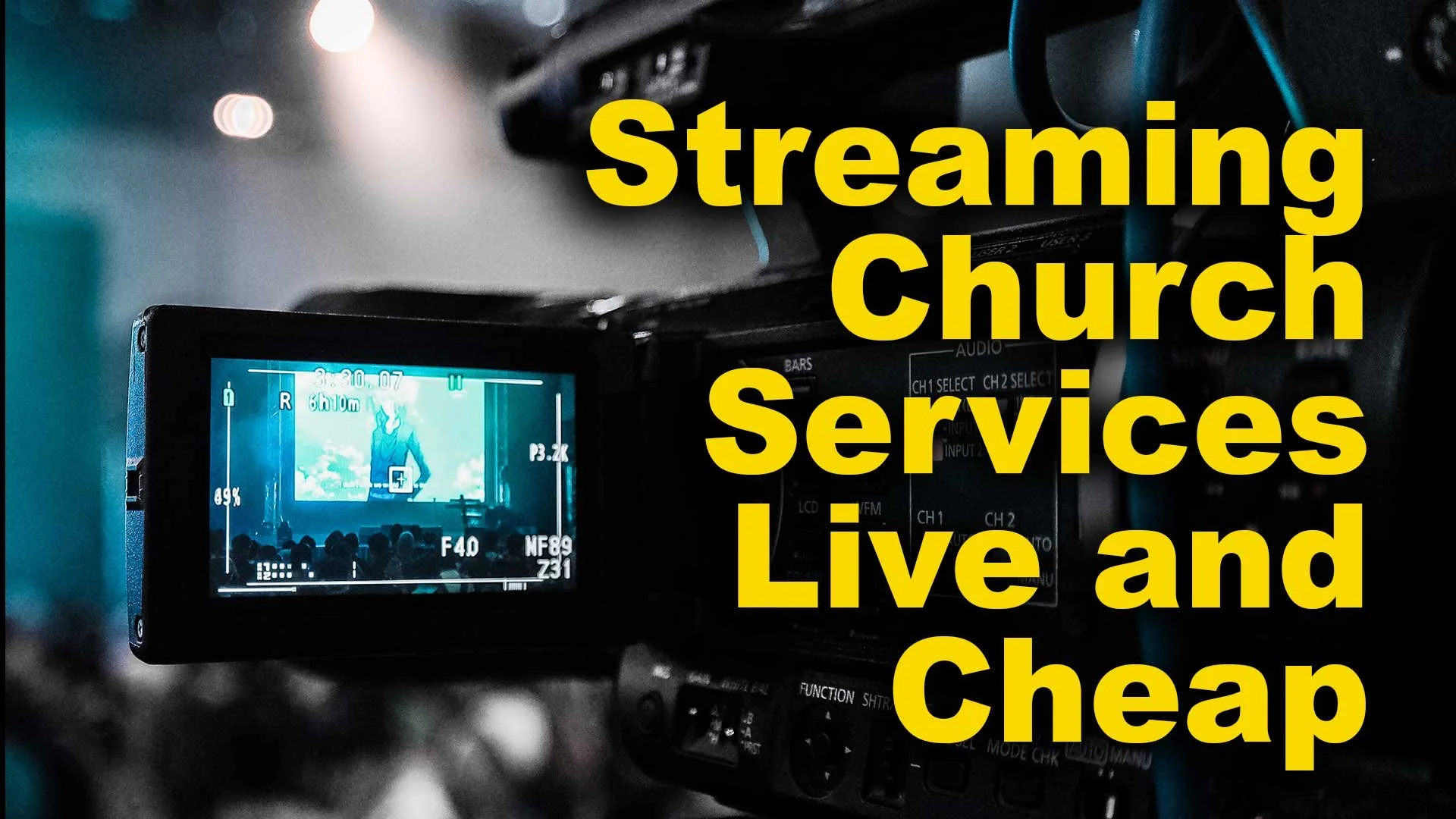
Get a decent 1080p camcorder with a clean HDMI out signal (see image and caption above) that will run for at least as long as your worship service, plus about 20 minutes. That could mean you leave it plugged in, or the battery lasts at least that long. What does all of that mean, and which one should you buy? Let's break it down...
- 1080p refers to the resolution. Some people recommend a 4K camera, but that's too much for most churches, and it will cost too much. However, if you already have one, then use it. Just set it for 1080p. 1080p means the resolution of the camera is 1920 pixels horizontally and 1080 pixels vertically. The P stands for pixels.
- Get a camcorder like everyone used to buy before cell phone cameras became so powerful. Make sure it has a 30x optical zoom. Ignore the digital zoom because it makes things look really blurry. Turn off the digital zoom. Only use optical zoom and make sure it does 30x, especially if the camera sits in the back of the auditorium. You want it in the back, so you don't distract attendees.
- Make sure the camera supports a clean HDMI signal (see above image and caption for description). If it doesn't support a clean single, then you'll see things like the battery indicator and the other onscreen display items you see on the small screen on the camcorder. How do you know if the camera supports a clean HDMI signal output? Look at the specs of the camera or ask the person selling it. You can also go to Amazon and ask about the camera.
- The camera needs to run on battery at least 20 minutes longer than your worship service. That way, you can turn it on and test everything before the service. The best camcorders run on AC power plugged into an electric outlet instead of running them off battery power.
We don't have room to go into more detail about camera specs. Adhering to the four things above will give you a great camera. Let me recommend a couple of cameras.
Canon VIXIA HF R800 Camcorder

The Canon VIXIA HF R800 will stream your church service, fulfilling the four requirements above. It supports 1080p and has a clean HDMI signal that would show the distracting icons on the built-in display to your viewers.
The camera supports 32x optical zoom for streaming church services live. Ignore the 57x digital zoom because when you zoom in that far, two things happen. Video quality degrades, and your camera operator will struggle to keep the image stable.
Finally, the camera operator can plug it in a while streaming church services live. The camera will run for about one hour and forty minutes on battery life.
There's one problem with the R800. It costs $300 at B&H Photo and that was cheapest price we could find.
Panasonic HC-V180K Camcorder

Take a look at the Panasonic HC-V180K for a slightly less expensive camera ($229.99 at B&H Photo). It supports a clean 1080p HDMI signal with a nice 50x optical zoom. Again, ignore the 90x "intelligent zoom," which is a misnomer because you'd be stupid to use it.
Consider looking for each of these cameras used. You can often find a camera that is in good condition for less than the retail value.
Streaming Church Services - Software
The cheapest place to stream also invites the largest audience. That's Facebook.
I've tried dedicated streaming services like Dacast and going live to YouTube before settling on Facebook. Google now requires 1,000 subscribers on a channel before they can stream live to their service using the YouTube user interface. Churches can also subscribe to expensive services that put your live stream on your website, or there's for anywhere from hundreds of dollars a year to thousands.
Facebook lets churches stream for free, and they don't need a minimum number of subscribers or followers. Whether you like Facebook or like the way they've limited or allowed certain kinds of accounts and content, it's the cheapest available. That's what my church uses.

How can you get the signal from the camera to Facebook? We'll talk about the connecting accessories below. First, what software should you use? Facebook has its own streaming user interface. Set up a Facebook page and then use their live streaming feature built into the website.
You can add some cool features like lower thirds, text written at the bottom of the video to show what's on your stream. Use it to put the names of people leading worship or the title of the pastor's sermon. To get that you'll need some software.
Take a look at three options below:
- OBS Studio - a free, powerful, open-source program that lets you stream live to Facebook and more. It's complex, but with some time and effort to learn the program, OBS Studio gives users the most powerful solution for no cost to their church.
- Ecamm Live - a great piece of software that makes streaming to Facebook easy, but it's at least a $16/month subscription.
- Restream - a program like Ecamm but offers a free version. I've not used it, but a lot of people prefer it.
- Dacast - a more costly program like Ecamm and Restream. It's more of a service, which offers streaming that you can embed on your church's website.
Of the two above options, I'd recommend OBS Studio if you don't want to use the Facebook page streaming interface. I only mentioned Ecamm Live because I use it at my church. We're grandfathered into the pre-subscription model. You can't get that now, but the software is easy to use. They charge either $16 or $32 per month to use it. They offer a 14-day trial.
Restream is another program that streams videos for you. It's slightly more expensive than Ecamm at the high end. It starts at $16 per month for the subscription version with some of the bells and whistles. The higher tier sells for $41 per month.
OBS Studio is more powerful but more complicated and also free. Ecamm is the easiest tool for churches without someone who can figure out OBS, but it's also expensive due to a monthly subscription. You could say the same for Restream and Dacast.
Other streaming software exists, but it's usually more expensive. If your church already subscribes to software for worship presentation, it might also include streaming features. Proclaim from Faithlife has an option for streaming and Podcasting.
Streaming Church Services - Computer
We put this hardware item last because it's honestly the least important. My church uses a 2014 Mac mini. I upgraded the internal hard drive with a 500GB SSD, and it runs fine. I paid $200 for the computer used and less than $75 for the SSD.

You can also get a recent model Windows computer. Desktops usually cost less than laptops. If you can run Windows 10, you can likely stream from it. Streaming doesn't require a high-end computer. Some people bring their own laptops to church and use them.
If you can afford a brand new system, I'd recommend the new M1-based Mac mini, which costs $800 for a basic version. It's not a "cheap" solution, but it will last a long time in most cases and can handle all that we've talked about for streaming. It's still not incredibly expensive, like a $2000 multimedia PC or MacBook Pro.
Connecting the Camera, Computer, Software, and Sound
Our church sanctuary has a balcony with our soundboard, computer, and camera in the center front of it. We can easily connect our camera, computer, and soundboard because they're within 6 feet of each other. If those three things sit further apart, it will potentially get harder to connect them. If you're set up like we are, then you can follow the first example below.

We put our camera on a sturdy tripod and plug it into a power outlet so that we don't have to worry about the battery running out. We use a mini-HDMI to full-sized HDMI cable coming out of the camera. It plugs into a box made by Blackmagicdesign ($160). It has an HDMI input on one side and a USB-C port on the other. Plug that into your computer.
The computer will "see" this input as a camera, and Facebook or other streaming software will let the operator choose it as the video source.
Connecting Soundboard to Computer
Don't use the sound from the camera for streaming church services live. You probably have a professional sound system with mics meant for soloists and speaking. Use it instead. Connect the soundboard to the computer's sound input using whatever kind of cable you have for sound output.
Our soundboard has a stereo output port with reliable white and red jacks, also called RCA jacks. On the other end of the cable, there's a 3.5mm stereo connector. That goes into the computer using the kind of cable you see below.

You will need this adapter if you have a Mac with a 3.5mm sound jack input. The Mac expects a cable with 3 signals coming in from something like the white Apple earbuds. Your white Apple earbuds or other earbuds or headphones with a mic have three signals going into the computer. One handles the voice coming from the mic in the earbuds or headphones. The other two are the right and left coming from the computer into the headphones. It would help if you had an adapter to change the stereo signal from the soundboard into something the computer jack can handle. For a complete explanation of TRS and TRRS connectors, watch the video below.
Windows PC users may also need the above kind of cable. They might not. There are too many different kinds of Windows PCs to explain how each of them works.

If your church soundboard doesn't have RCA outputs, you may need to use a quarter-inch to 3.5mm TRRS cable. The above video explained that thes "TS Cables" are quarter-inch connectors. But they work the same way. You can find them on Amazon for $10-$20 like this one. Some people will need an XLR cable that converts to 3.5mm TRRS. You can get either a male or female version.
A Better Sound Interface - USB
While the above cables will most likely work, a more expensive solution definitely will work. Get a good USB audio capture device. These devices connect to the computer using USB. Plug your audio cable from the soundboard into the device. It converts it to a digital version that the computer receives over USB.

An expensive high-end version comes from Zoom. The Podtrack P4 works great. I use it for my Wednesday night live streams at church. However, it costs $200 and has more than you need.

If you need a budget option that costs less that $50, take a look at a USB capture device like the Foxnova Game Capture Card. I have to admit, I've not used this one. However, it supports capturing both the HDMI and audio signal so you could potentially ditch the Blackmagjicdesign UltraStudio 3G we looked at above. Take a look at the video below to see an unboxing video.
To Sum It All Up
Let's sum it all up. To start, grab one of the cameras above or see if someone owns a camcorder in your church. They may donate it. Make sure it supports 1080P, clean HDMI output has at least 30x optical zoom. That should cost between $220-$350.
Grab the Blackmagicdesign UltraStudio 3G or the Foxnova Game Capture Card for $50-$160, depending on which one you choose. I'd start with the Foxnova card. It's cheaper. If it doesn't work, return it to Amazon and get the Blackmagicdesign.
Connect the camera to the box with the right mini HDMI cable. Connect the soundboard with the right kind of cable. These should cost less than $50 depending on what you buy.
If you don't already have a computer, try and find a used Mac mini ($200-$400) or get the latest M1 Mac mini ($700).
The software should be free unless you buy something like Ecamm Live.
All of the above hardware adds up to $550 to $1260. That's far less than most churches probably paid for their equipment, cables, and software.