

Streaming Church Services Live and Cheap
Most churches start streaming church services live during Covid. You probably wish to continue that, but how do you do it without paying thousands of dollars?
Since Covid closed down America's in-person worship services in March 2020, most churches started streaming church services live on Facebook or other services. You can spend thousands of dollars on equipment and service fees, or you can spend far less. In fact, if you follow my recommendations, you can start streaming this week for far less than a thousand hundred dollars.

We'll look at the cameras you can use cheaply. You can buy inexpensive software and use what you already likely have in your church's sound booth to connect it all.
Streaming Church Services - The Camera
Most people start by thinking about a camera. The number one post on my site covers the 4 styles of the camera for streaming church services. Please read that post first for a comprehensive guide to choosing a camera. However, I recommend one kind for budget streaming.
Why not use your phone? Many smartphones come with a great camera. You can, but I don't think it gives you the best option. If you can't afford the cameras below, then use your phone. But you'll need to buy a mic anyway, so spend a little more and get a great dedicated camera that you don't have to worry about charging, getting intrusive notifications, and can't zoom or pan while recording as easily.

Get a decent 1080p camcorder with a clean HDMI out signal (see image and caption above) that will run for at least as long as your worship service, plus about 20 minutes. That could mean you leave it plugged in, or the battery lasts at least that long. What does all of that mean, and which one should you buy? Let's break it down...
- 1080p refers to the resolution. Some people recommend a 4K camera, but that's too much for most churches, and it will cost too much. However, if you already have one, then use it. Just set it for 1080p. 1080p means the resolution of the camera is 1920 pixels horizontally and 1080 pixels vertically. The P stands for pixels.
- Get a camcorder like everyone used to buy before cell phone cameras became so powerful. Make sure it has a 30x optical zoom. Ignore the digital zoom because it makes things look really blurry. Turn off the digital zoom. Only use optical zoom and make sure it does 30x, especially if the camera sits in the back of the auditorium. You want it in the back, so you don't distract attendees.
- Make sure the camera supports a clean HDMI signal (see above image and caption for description). If it doesn't support a clean single, then you'll see things like the battery indicator and the other onscreen display items you see on the small screen on the camcorder. How do you know if the camera supports a clean HDMI signal output? Look at the specs of the camera or ask the person selling it. You can also go to Amazon and ask about the camera.
- The camera needs to run on battery at least 20 minutes longer than your worship service. That way, you can turn it on and test everything before the service. The best camcorders run on AC power plugged into an electric outlet instead of running them off battery power.
We don't have room to go into more detail about camera specs. Adhering to the four things above will give you a great camera. Let me recommend a couple of cameras.
Canon VIXIA HF R800 Camcorder

The Canon VIXIA HF R800 will stream your church service, fulfilling the four requirements above. It supports 1080p and has a clean HDMI signal that would show the distracting icons on the built-in display to your viewers.
The camera supports 32x optical zoom for streaming church services live. Ignore the 57x digital zoom because when you zoom in that far, two things happen. Video quality degrades, and your camera operator will struggle to keep the image stable.
Finally, the camera operator can plug it in a while streaming church services live. The camera will run for about one hour and forty minutes on battery life.
There's one problem with the R800. It costs $300 at B&H Photo and that was cheapest price we could find.
Panasonic HC-V180K Camcorder

Take a look at the Panasonic HC-V180K for a slightly less expensive camera ($229.99 at B&H Photo). It supports a clean 1080p HDMI signal with a nice 50x optical zoom. Again, ignore the 90x "intelligent zoom," which is a misnomer because you'd be stupid to use it.
Consider looking for each of these cameras used. You can often find a camera that is in good condition for less than the retail value.
Streaming Church Services - Software
The cheapest place to stream also invites the largest audience. That's Facebook.
I've tried dedicated streaming services like Dacast and going live to YouTube before settling on Facebook. Google now requires 1,000 subscribers on a channel before they can stream live to their service using the YouTube user interface. Churches can also subscribe to expensive services that put your live stream on your website, or there's for anywhere from hundreds of dollars a year to thousands.
Facebook lets churches stream for free, and they don't need a minimum number of subscribers or followers. Whether you like Facebook or like the way they've limited or allowed certain kinds of accounts and content, it's the cheapest available. That's what my church uses.

How can you get the signal from the camera to Facebook? We'll talk about the connecting accessories below. First, what software should you use? Facebook has its own streaming user interface. Set up a Facebook page and then use their live streaming feature built into the website.
You can add some cool features like lower thirds, text written at the bottom of the video to show what's on your stream. Use it to put the names of people leading worship or the title of the pastor's sermon. To get that you'll need some software.
Take a look at three options below:
- OBS Studio - a free, powerful, open-source program that lets you stream live to Facebook and more. It's complex, but with some time and effort to learn the program, OBS Studio gives users the most powerful solution for no cost to their church.
- Ecamm Live - a great piece of software that makes streaming to Facebook easy, but it's at least a $16/month subscription.
- Restream - a program like Ecamm but offers a free version. I've not used it, but a lot of people prefer it.
- Dacast - a more costly program like Ecamm and Restream. It's more of a service, which offers streaming that you can embed on your church's website.
Of the two above options, I'd recommend OBS Studio if you don't want to use the Facebook page streaming interface. I only mentioned Ecamm Live because I use it at my church. We're grandfathered into the pre-subscription model. You can't get that now, but the software is easy to use. They charge either $16 or $32 per month to use it. They offer a 14-day trial.
Restream is another program that streams videos for you. It's slightly more expensive than Ecamm at the high end. It starts at $16 per month for the subscription version with some of the bells and whistles. The higher tier sells for $41 per month.
OBS Studio is more powerful but more complicated and also free. Ecamm is the easiest tool for churches without someone who can figure out OBS, but it's also expensive due to a monthly subscription. You could say the same for Restream and Dacast.
Other streaming software exists, but it's usually more expensive. If your church already subscribes to software for worship presentation, it might also include streaming features. Proclaim from Faithlife has an option for streaming and Podcasting.
Streaming Church Services - Computer
We put this hardware item last because it's honestly the least important. My church uses a 2014 Mac mini. I upgraded the internal hard drive with a 500GB SSD, and it runs fine. I paid $200 for the computer used and less than $75 for the SSD.

You can also get a recent model Windows computer. Desktops usually cost less than laptops. If you can run Windows 10, you can likely stream from it. Streaming doesn't require a high-end computer. Some people bring their own laptops to church and use them.
If you can afford a brand new system, I'd recommend the new M1-based Mac mini, which costs $800 for a basic version. It's not a "cheap" solution, but it will last a long time in most cases and can handle all that we've talked about for streaming. It's still not incredibly expensive, like a $2000 multimedia PC or MacBook Pro.
Connecting the Camera, Computer, Software, and Sound
Our church sanctuary has a balcony with our soundboard, computer, and camera in the center front of it. We can easily connect our camera, computer, and soundboard because they're within 6 feet of each other. If those three things sit further apart, it will potentially get harder to connect them. If you're set up like we are, then you can follow the first example below.

We put our camera on a sturdy tripod and plug it into a power outlet so that we don't have to worry about the battery running out. We use a mini-HDMI to full-sized HDMI cable coming out of the camera. It plugs into a box made by Blackmagicdesign ($160). It has an HDMI input on one side and a USB-C port on the other. Plug that into your computer.
The computer will "see" this input as a camera, and Facebook or other streaming software will let the operator choose it as the video source.
Connecting Soundboard to Computer
Don't use the sound from the camera for streaming church services live. You probably have a professional sound system with mics meant for soloists and speaking. Use it instead. Connect the soundboard to the computer's sound input using whatever kind of cable you have for sound output.
Our soundboard has a stereo output port with reliable white and red jacks, also called RCA jacks. On the other end of the cable, there's a 3.5mm stereo connector. That goes into the computer using the kind of cable you see below.

You will need this adapter if you have a Mac with a 3.5mm sound jack input. The Mac expects a cable with 3 signals coming in from something like the white Apple earbuds. Your white Apple earbuds or other earbuds or headphones with a mic have three signals going into the computer. One handles the voice coming from the mic in the earbuds or headphones. The other two are the right and left coming from the computer into the headphones. It would help if you had an adapter to change the stereo signal from the soundboard into something the computer jack can handle. For a complete explanation of TRS and TRRS connectors, watch the video below.
Windows PC users may also need the above kind of cable. They might not. There are too many different kinds of Windows PCs to explain how each of them works.

If your church soundboard doesn't have RCA outputs, you may need to use a quarter-inch to 3.5mm TRRS cable. The above video explained that thes "TS Cables" are quarter-inch connectors. But they work the same way. You can find them on Amazon for $10-$20 like this one. Some people will need an XLR cable that converts to 3.5mm TRRS. You can get either a male or female version.
A Better Sound Interface - USB
While the above cables will most likely work, a more expensive solution definitely will work. Get a good USB audio capture device. These devices connect to the computer using USB. Plug your audio cable from the soundboard into the device. It converts it to a digital version that the computer receives over USB.

An expensive high-end version comes from Zoom. The Podtrack P4 works great. I use it for my Wednesday night live streams at church. However, it costs $200 and has more than you need.

If you need a budget option that costs less that $50, take a look at a USB capture device like the Foxnova Game Capture Card. I have to admit, I've not used this one. However, it supports capturing both the HDMI and audio signal so you could potentially ditch the Blackmagjicdesign UltraStudio 3G we looked at above. Take a look at the video below to see an unboxing video.
To Sum It All Up
Let's sum it all up. To start, grab one of the cameras above or see if someone owns a camcorder in your church. They may donate it. Make sure it supports 1080P, clean HDMI output has at least 30x optical zoom. That should cost between $220-$350.
Grab the Blackmagicdesign UltraStudio 3G or the Foxnova Game Capture Card for $50-$160, depending on which one you choose. I'd start with the Foxnova card. It's cheaper. If it doesn't work, return it to Amazon and get the Blackmagicdesign.
Connect the camera to the box with the right mini HDMI cable. Connect the soundboard with the right kind of cable. These should cost less than $50 depending on what you buy.
If you don't already have a computer, try and find a used Mac mini ($200-$400) or get the latest M1 Mac mini ($700).
The software should be free unless you buy something like Ecamm Live.
All of the above hardware adds up to $550 to $1260. That's far less than most churches probably paid for their equipment, cables, and software.
Streaming Church Services Live from a Phone Made Simple
Churches that want to extend their reach should consider streaming church services to platforms like Facebook Live or YouTube. Church leaders might not know how to get started and what they need to stream church services live online. We'll help church leaders choose tools for streaming church services online live.

This first article in a series about streaming church services will focus on making the decision on how to stream and what tools you'll need to stream from a smartphone. Next, we look at the tools needed for streaming with higher quality cameras and equipment in article two. Then, we'll look at the software and streaming services in the third article. Finally, we'll put it all together in the final installment of this series on streaming church services live online.
Here are the other posts in this series:
- The Four Best Camera Styles for Streaming Church Services Live
- Streaming Church Services Live Using Facebook or YouTube Apps or Pages
- 7 Best Tools for Streaming Church Services
- Streaming Chruch Services Life and Cheap
Should You Use a Phone for Streaming Church Services?
First, let’s talk about how you plan to stream your worship services and more. Most people will stream their Sunday morning worship services. For a lot of us that takes place at 11:00 a.m. on Sunday.
Churches stream their worship service in a lot of different ways.
- Streaming Church Services on a Smartphone
- Stream from a dedicated camera through a computer or other device
- A professional setup with multiple cameras, a switcher and visual animations like a TV news broadcast
Of the three styles of streaming church services, the first costs the least. It's also more accessible for people with little to no tech skills. However, it also doesn't look as professional and will often sound subpar.
Sound is important and that's the biggest reason why I'd shy away from streaming from your iPhone or Android phone. You can still use it and if you connect an external microphone or find a way to connect the phone to your sound system, then it will sound better and seem more professional.
Some churches can't afford to pay for a camera, any accessories needed to connect to your sound system or make it sound better, or an installer to set things up. Just load up the Facebook app and stream using Facebook. You'll need someone to hold the camera from the front row. Tell them to hold it very still and don't make a sound.
For those who decide they still want to use their phone but want better sound and a stable video feed, consider buying the following tools:
- An external microphone
- A tripod
- A holder for your phone
Before you go all-in using your smartphone remember the following:
- Phone cameras can't get close enough to the speaker and singers on stage for a professional looking stream without distracting the service attendees.
- Pointing a phone up at a raised platform from the front row looks bad especially if you can't see the speaker or singer behind the podium.
- Holding a phone results in a wobbly video unless you put it on a tripod, which might not look very good to the worship service attendees.
- A phone mic sounds bad compared to your church sound system that you paid hundreds or more likely thousands of dollars to sound good.
- Unless you have someone operating the camera at all times, you're forced to frame the video so that the speaker or singer is always in view of the camera, which looks too far apart.
But how do you stream using your iPhone or Android phone and still make it look and sound decent enough for viewers to continue watching? Will they watch and consider joining you in person in the future?
Tripod for Streaming Church Services with a Phone
You've decided to stick with a smartphone like your Apple iPhone or a good Android phone with a decent camera. What do you need to make the stream look good enough to keep people watching?
First, use a tripod to keep the video stable. Any tripod will do if you get the right accessory to hold the phone. I like products from smartphone accessory maker Joby. They offer phone tripod mounts that work great and don't cost too much. Take a look at their guide on buying mounts for your phone. These will hold the phone in either portrait or landscape mode and attach the phone to any standard tripod. They even sell tripods.

The Joby GripTight Pro Phone mount costs $30 and secures the phone tightly. Screw it into a tripod mount with a typical 1/4"-20 tripod mount. That's the little screw that you screw into the bottom of a traditional camera on top of the tripod.
This mount will rotate from portrait to landscape mode. That means holding the phone so it looks tall (portrait) or wide (landscape). The best option for professional looking streams is landscape or wide mode. The person watching on a phone can rotate their phone but the person watching on a computer or a TV with the phone or computer connected to it can't rotate the computer or TV screen easily.
Always use widescreen mode unless you know that 100% of your viewers want to watch it on portrait or tall mode.
You can use almost any tripod to hold the phone. A full-size tripod will offer the most stable option, but it might look bad to people attending the service since it has to sit close to the front of the auditorium.
You could choose something like a mount that holds the camera from on the front pew or seat. Joby also offers great options like their GorillaPod Line of tripods. You can get the above GripTight mount and the GorillaPod Tripod for $59.95 together.
This has legs that bend so you can fasten it to the front pew or seat back. You can also fasten it to anything else to bring the camera on your phone closer to the stage.
Any mount and tripod combination will work so long as the mount holds your phone in widescreen/landscape mode. Make sure the mount will fit your phone. Most modern mounts will, but measure it before you buy.
Sound for Streaming Church Services from a Phone
While camera phones often come with excellent cameras, they seldom come with decent microphones. That's compounded by the fact that you're usually not holding the phone close enough to yourself while speaking or singing. If a singer uses a canned accompaniment track or other instruments, they are not close to the camera.
The single biggest consideration for streaming live video isn't the video quality. It's the sound quality. Viewers care more about sound and will forgive lower quality video if it sounds good. Services like Facebook and YouTube actually put more of their focus on streaming good audio if the Internet connection gets week.
You can fix the audio problem by connecting a good mic system or by hooking your phone up to the church sound system. Let me offer three options.
Best Option: Wired Connection to the Sound System
Run a wire from your sound system to the phone. Find an output on your sound system and connect a wire to that output connection. Then connect the other end to the phone. If only it was that simple!
Your phone camera might sit too far away from the sound system to make this convenient. Try to run a longer cable if possible. It's the best option.
What kind of cable should you use? That depends on the sound system and the phone input. Let's start with the phone.

All recent iPhones use a Lightning connection and don't include a sound port anymore. You'll need to connect a Lightning to 3.5 mm Headphone Jack Adapter. It's only $9 at Apple.com. Don't bother with anything else. This works and they're cheap.
To connect the cable to the board you'll need what's called a TRRS to TRS adapter. What's that? If you don't care and just want buy one, check out Amazon. That link takes you to a search result on Amazon. Find one that's highly rated and read the reviews. Ask the buyer if it will work on a church sound system and see what they say. Now skip to the next heading below. If you do care what TRRS and TRS stand for keep reading.

Here's the explanation if you want it. A TRRS to TRS adapter lets you plug a cable with three lines to one with two. The letters stand for Tip, Ring and Sleeve (see above image). The ring separates the two black lines, which connect the wires in the cable to the device you're plugging into. So the above image shows a stereo cable with left and right audio.
A typical sound cable used just for sound will have a quarter-inch or 3.5mm jack with TRS like the image above. That means it has two wires for left and right sound connections.

If the cable has three (Tip, Ring, Ring, Sleeve or TRRS), it's designed for a phone with left, right and mic. These are used for earbuds or headphones with a mic so you can listen and talk on your phone. A sound system can't handle the TRRS or three connectors. So you need an adapter to take it from three to two.
Some sound systems have two outputs, one for left channel and one for right. Typically they will look like a red and white connector. If that's the case you'll need one of those too. Some use a larger quarter-inch jack to connect to the sound system. So, you'll need an adapter to connect the quarter inch to the smaller 3.5mm jack.
Second Best Option: External Microphone
If you don't connect the phone to your sound system, then you should get an external microphone. The best option comes from a company called Rode.
The Rode Wireless Go comes in two pieces, a transmitter and receiver, which wirelessly connect to each other. The receiver connects to the phone with a 3.5mm cable. You can use the adapter from the above part about connecting to your sound system.
The transmitter of the Rode Wireless God works like a lapel mic. It has a built-in mic. Turn both parts on and they will connect to each other wirelessly. The transmitter with mic works like a regular mic.
The transmitter also has an input for a 3.5mm connection from an external mic. I have a mic with a 3.5mm jack and plug it into the Rode Wireless transmitter.
Hooking Up an Android Phone
The above discussion focused mainly on an iPhone. Android phones have one of two connections. Does your Android phone have a headphone jack or not? If it does, then just use the cables mentioned above without the Lightning to 3.5 mm adapter from Apple. You don't need it.
How do you tell if your Android phone has a headphone jack? Look for a little round hole like the one below.

If your phone doesn't come with a headphone jack, did the manufacturer supply an adapter for you to plug into the power port? You can use that adapter or buy a new one like it. Most of these use USB-C connectors or they might have a micro-USB adapter.

USB Type-C users can get the Apple USB-C to 3.5 mm adapter. It works with Android phones and only costs $9 at Amazon. For Micro-USB to headphone adapters, check out this highly rated adapter from Amazon for $10.
Now use the above instructions in the previous section for what you need to hook up your phone to your sound system.
Should You Use the Zoom Feature on Your Phone to Get Closer?
If you're happy with the way your phone looks and where you placed it in your auditorium, then you can skip this section and the next one. However, some people may still want to put their phone back further while getting a close-up shot of the speaker or singer. Should you use the phone's zoom feature, where you pinch out to make things look closer? Some cameras like the iPhone 11 have multiple optical lenses so you'll see a .5 (for wide angle), 1x or 2X button in the camera app. Those are fine. But should you go beyond the 2X setting and zoom closer?

Do not use the digital zoom, where you go closer than the 2X if you have 2 lenses. Use only the optical zoom. Digital zoom looks terrible. It blows up the photo beyond what the camera lens sees naturally and degrades the image quality.
If you don't believe me, take out your phone. Take a photo of the pulpit in your church. Us the regular zoom level, the 2x Zoom and then go in closer with digital zoom. Now compare the photos. The regular image and the 2X will look fine. The digital will look grainy and even blurry. DON'T USE IT even if you think it looks fine. Almost no one else, including potential visitors will agree!!
But what if you want to get closer than the 2X zoom lets you?
Adding a Physical Lens to Your Phone
You can add zoom lenses that add closer zoom capability to your camera phone without degrading the image quality. These do not come cheap if you want one that looks good. Search on Amazon or Google and you'll find a bunch of garbage options that cost $10 or $20. You get what you pay for.

I've found two companies that make decent zoom lenses for the iPhone or popular Android phones. The best option comes from a company called Moment Lens. I own a set of their lenses and they're fantastic. They make a number of lenses, but for our purpose take a look at their zoom lens. The 58mm lens doubles the zoom of the built-in lens using high-quality optical lenses. Connect the lens to a case on your phone to make it a 2X on the main lens or a 4X on the built-in 2X zoom on an iPhone 11. Other phones offer other zoom levels and the Moment 58mm lens will double those zooms.

The Moment lens costs $119.99. It ain't cheap. but it's still cheaper than a dedicated camera and makes an phones like the iPhone, Samsung Galaxy s10 and Google Pixel 4 usable.
To use the Moment Lens you'll need a case for your phone. They offer cases for iPhones, Galaxy phones and Pixel phones. Buyers can also get a mount that will fit on other phones. They're not as good as a case, but still work well with other phones besides the ones they make cases for. These cases and mounts start at $20 and cost as much as $50.
Olloclip makes cheaper lenses, but they're not as good. They use lower quality lenses and work with fewer phones. I don't recommend them.
Putting it All Together
Now that you have the gear and the understanding that using your phone works for people who need a low-budget option, let's put it all together.
Connect everything you bought...
- Put your case or mount on your phone.
- Hook the lens to the case or mount.
- Attach the cables and adapters to the sound system.
- Put your phone in the mount that you've attached to the tripod.
- Turn on your camera app and test the recording.
Remember that playing back your recorded video won't play on the phone until you unplug the cable connected to the sound board. Test it out and then plug it back in.
If it doesn't work, make sure everything is connected properly. Reverse the audio cables or adapters if need be. If it still doesn't work, it could mean a faulty cable or adapter. It also could mean you plugged the cable into the soundboard in the wrong place.
We don't have to the time to talk out how to use Facebook for streaming church services live. The step-by-step will show up in a later post in this series. For now, use the steps from the video above.
Bible Updates and Facebook Live: Theotek Podcast #104
Learn about Bible updates and the future of the Theotek Podcast in this week's show.In my previous post, I shared that we're changing our official home of the Theotek Podcast to Facebook Live. This is the first episode that we recorded using Ecamm Live over Facebook Live instead of using Google Hangouts and YouTube Live. Give it a watch below and go on over to our new Facebook Page where you can find all of our podcasts going forward. In this episode Rick Mansfield showed up of the updates that came in Accordance Bible software 12.2.2, bringing a build-in web browser. I love this new feature because it mean I can use Accordance and access my Logos books and WORDsearch books all from one program.https://www.youtube.com/watch?v=yQpNkluS04c&feature=youtu.beAfter that I shared updates to Laridian's PocketBible app for iOS and Logos Bible mobile app updates. I'm working on a full review. Go follow me on Twitter to get notice when that review goes live over at Church Tech Today.Here's the list of "Our Favorite Things" - the things recommend because we love them.
- DJI Spark Drone - a small 1080P drone that's compact and takes awesome photos and videos.
- LG UltraFine 5K Display - high-end display that's NOT 4K but 5K resolution.
- History of QuickVerse/Parsons Technology - history of QuickVerse Bible software and Parson's Technology from Craig Rairdin, the founder.
- SizzlingKeys - an app for controlling iTunes in a compact form.
- Ecamm Live and Call Recorder - software we used to record our Skype conversation directly to Facebook Live.
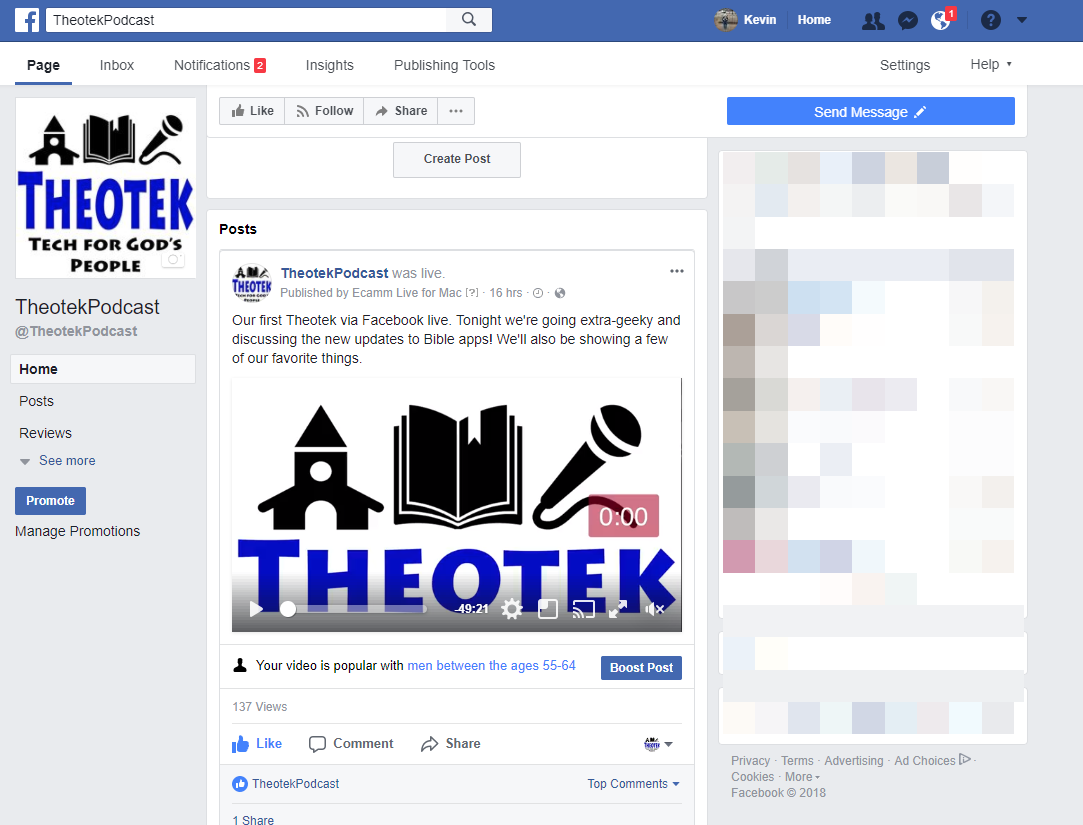
Theotek Podcast Changes Coming
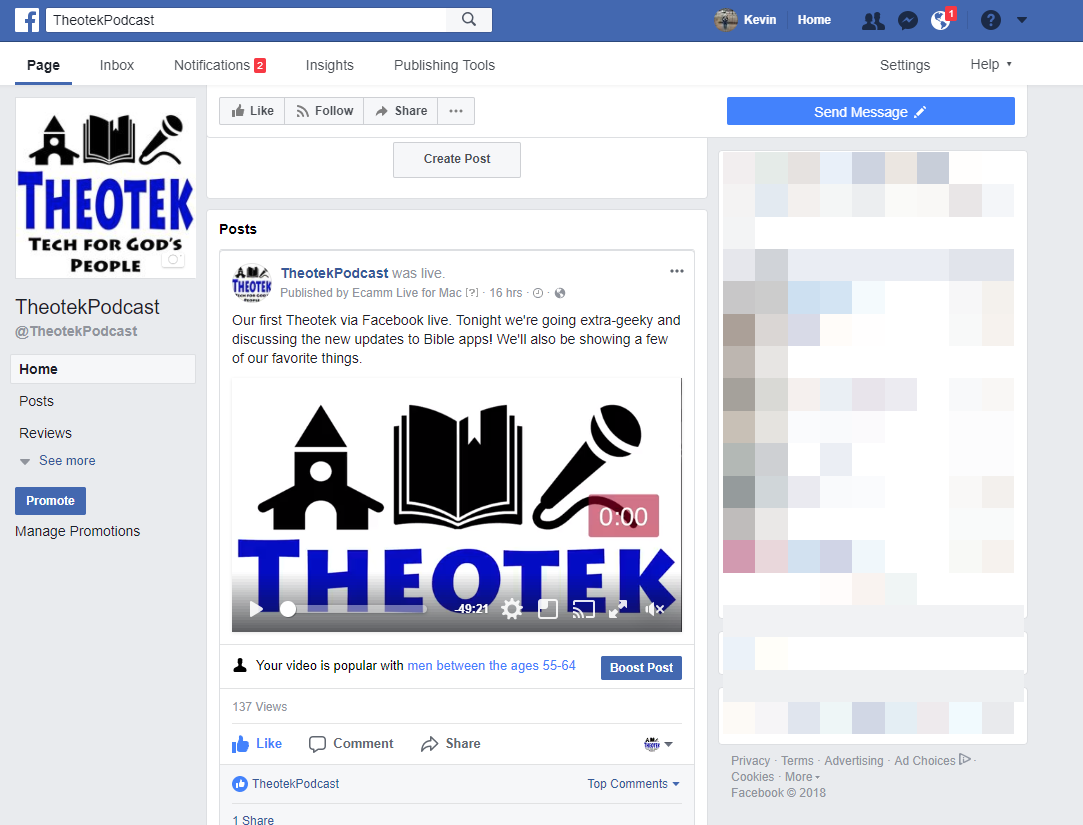
Over three years ago the Theotek Podcast got its start as a trio of tech lovers took the YouTube and recorded what we first called Theotek News. You can see that first episode below. At first LaRosa Johnson, Antoine Wright and I discussed Bible software and more. It was pretty rough. That was when I was still writing for Christian Computing Magazine, Antoine still had the Mobile Ministry Magazine and I was into Google+ big time. LaRosa announced the sale of Olive Tree to Harper Collins. What a blast from the past.https://www.youtube.com/watch?v=45DlwIjM_OoLater we added Wes Allen and then Rick Mansfield and recently Mark Allison. We often branch out of Bible or Church software and technology into the realm of general technology. But we've kept at it for over 100 shows.Now it's time for a change. It seems Google's changing the way they want customers to use Google Hangouts On Air. We feel like it's no longer a reliable tool for recording our Theotek Podcast. Going forward we're going to use Facebook Live through our new Theotek Podcast Facebook page. The team will get together over Skype and Wes will record it on his Mac using Ecamm Live software, a great tool for streaming live to Facebook or YouTube, but not both. It costs $40 for the basic program. Then you add their Call Recorder for Skype which costs another $40. We tried it with our show this week and it worked really well.We'll still be active on Twitter @TheotekPodcast and you can still watch for a while at YouTube. Going forward that YouTube Channel will primarily consist of my stuff, like a review I did of the Google Pixelbook recently. By the way I also wrote about using the Pixelbook for Bible Study here on this site.Please consider subscribing over at Facebook. Follows us on Twitter. Here's my statement on the YouTube channel.https://www.youtube.com/watch?v=ED-1fGXMD_Q
Live Streaming Your Church: Theotek Podcast #095
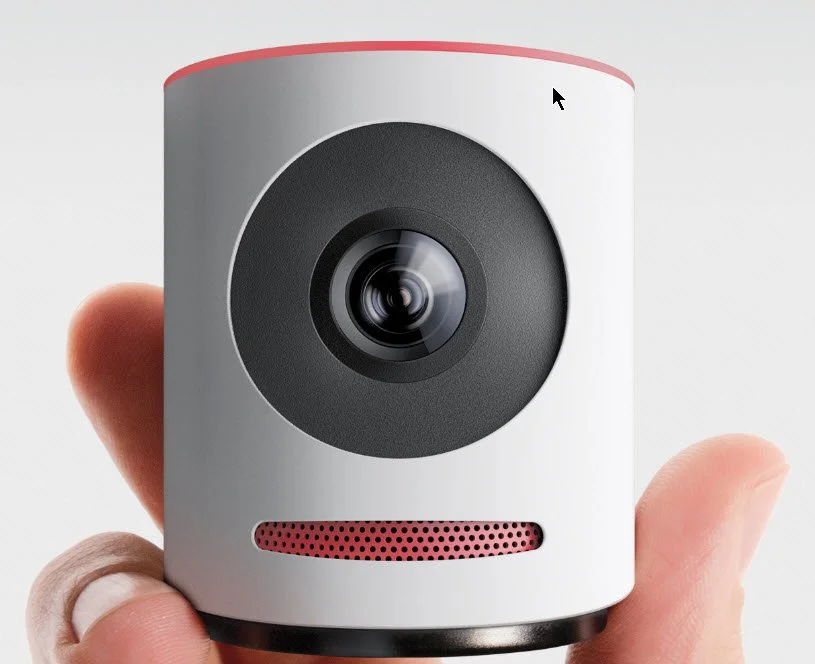
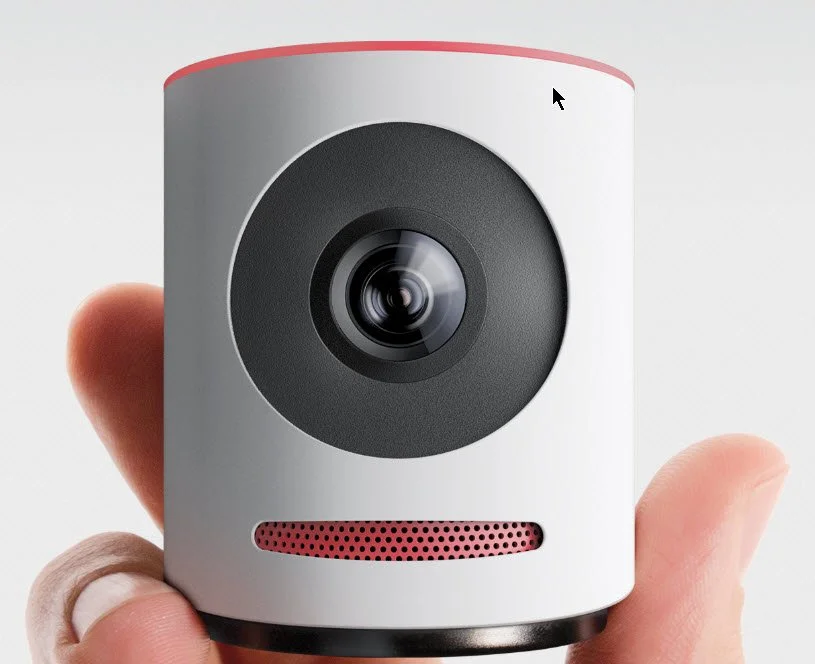
We do a live streaming podcast each week at Theotek Podcast so we thought we'd talk about whether a church should stream their services live each week. Then, we got into the best reasons to live stream and where to do it. Finally, we looked at the Mevo from LiveStream, which streams in high quality to Facebook Live and LiveStream. The company just announced a service which will live stream to YouTube as well.https://www.youtube.com/watch?v=ROkVBFKJ7LM&feature=youtu.be
Live Stream with Mevo
The Mevo camera that I mentioned in the podcast offers a great way to stream to Facebook Live and other services. The free version of the service only works with Facebook Live and LiveStream, but a paid service that costs $10/month just opened up. It streams to the following:
- Facebook Live
- Livestream
- YouTube Live
- Periscope
- Twitch
It claims to do this at the same time. I've not tried it out yet, so I can't say how well it works streaming to all five sites. I have tested it on my Facebook page and it worked well considering I don't yet fully get how to use the software.The Mevo streaming app runs only on iOS right now. They may come out with an Android version.
Our Favorite Things
For our favorite things this week, I talked about the Mevo camera. Just a few more details about the camera:
- Sony 4K Sensor.
- 12.4 Megapixels.
- 4K video resolution but streams at only 720p.
- 16:9 aspect ratio.
- 30fps streaming.
- H.264 codec.
- Dual analog mics with 65db signal to noise ratio.
- Streams audio in 8kHz to 192kHz at 8/10/12 bits.
- Inputs for audio via iPhone.
- Only works with iPhone, iPad, or iPod Touch.
- 802.11a/b/g/n Wi-Fi in either Access Point mode, which then streams through the iPhone or iPad's LTE network connection or over Wi-Fi through your local network's connection to the Internet.
- Bluetooth 4.0 used only for configuring the camera.
- Up to 1 hour battery life.
- 100Mbps over Ethernet if you get the Mevo Boost attachment which costs $249.99 and adds a USB charger and lifts the camera 6.18-inches and adds up to 10 hours of battery life.
 There's a bundle that buyers can get that includes the camera, the Mevo Boost and a case for carrying. It costs $699.97. You can get a $50 off coupon if you use this link.
BAGSMART Travel Universal Cable Organizer
 Rick shared a slightly less expensive accessory. The BAGSMART Travel Universal Cable Organizer costs less than $19 and keeps all of your cables and adapters in order in a nice zipper pouch.
The Value of Free Stuff: Theotek Podcast #080
Sometimes churches or believers can't afford the high-end or expensive option in many categories like Bible software or web services, so we've got some of the best free stuff or free alternatives for you. We shared our favorite freebies that churches, pastors, and believers can use to help build the kingdom of God in their context without wrecking their wallet or bank account balance.Below the video you'll see the list of freebies starting with the Bible Software free stuff and then a simple list of the other free stuff we talked about in this episode of the Theotek Podcast.https://www.youtube.com/watch?v=b7KWo7eQkLo
Bible Study Free Stuff
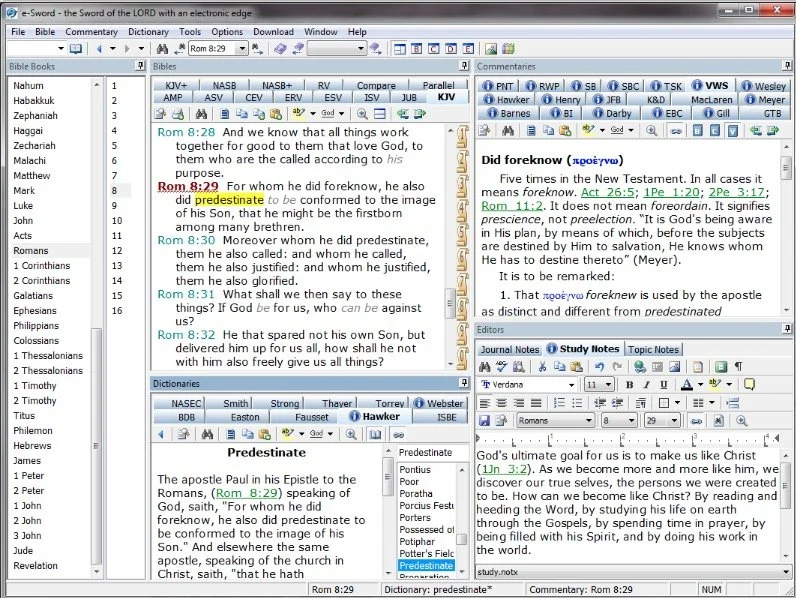
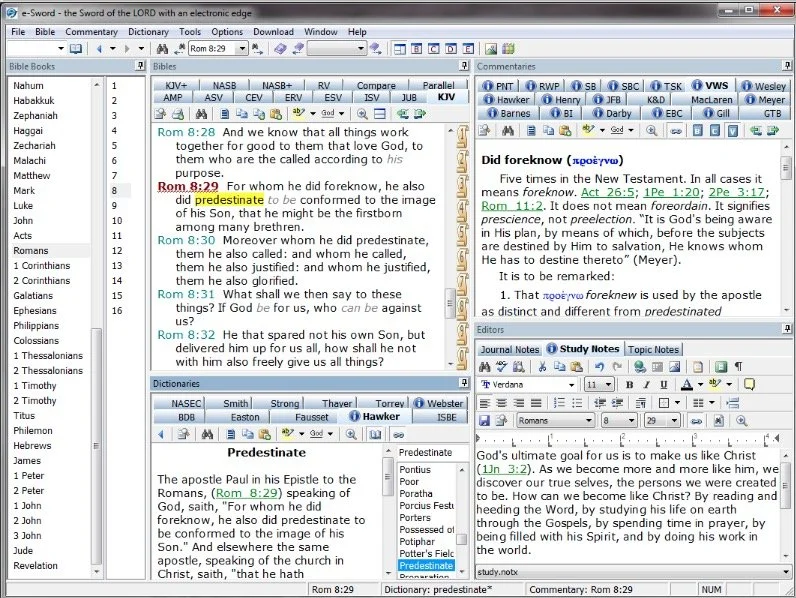
e-Sword is the best free Bible study app available. They make both PC version and a Mac version, that's not free but really inexpensive. Sticking with Bible study Rick Mansfield showed off the free Accordance Mobile app, which people can download on their iPhone or iPad and get a ton of free content, especially if you sign up for a free user account with Accordance. Rick showed off the great ESV interlinear Bible available in the app.
 Antoine showed us his favorite Bible app called Verse3. We had the developer of Verse3 on show #044. It's not free, but only costs $5.
 Olive Tree offers a free version of their Bible app for almost every platform you could want. Download the app on your computer or mobile device, get some free content and then, if you prefer, add some premium content later as needed.
 I showed off some free online Bible study sites that I wrote about a while ago in a two-part series. Here's part two.Finally, LaRosa also reminded us that WORDsearch, his former employer, offers what used to be called Bible Explorer. It's now called WORDsearch Basic and it's now their free option.
The Other Free Stuff
Here's our list of other Free Stuff to help you do your work for free or almost free.
- WordPress website management system also called a content management system or CMS. You can set up a free website and even buy a domain from a company like Hover that will forward that domain to your free WordPress site.‘
- YouTube for video hosting and for playing videos. Find tons of content from entertainment to music to educational content all on YouTube. Of course we use it to stream our Theotek Podcast.
- Microsoft Sway is a great presentation app that lets users share images and pictures. Think of it as a PowerPoint or Keynote alternative for online presentations.
- Facebook Live lets you record and host live video which people can then find later in recorded form on your Facebook wall.
- Libre Office offers a full free office suite with alternatives for Word, Excel, PowerPoint and more.
- Google gives away tons of free tools, including free office software like Google Docs, Sheets, Slides and Forms.
iPhone 7
We ended the show discussing the new iPhone 7, which Rick and I both had our hands on. I did an unboxing of the wrong phone. Watch me get totally disappointed because T-Mobile screwed up and sent me an iPhone 7 instead of the iPhone 7 Plus I actually ordered. Watch the above video to hear what Rick thinks of his iPhone 7 Plus.https://www.youtube.com/watch?v=OkI6psZCfdA